Category Archives: All Recipes

My tomato bowl runneth over

My bounty

I have four tomato plants in my backyard.  I used to plant six but that just caused grief.  They got big, they intertwined, they bent over in despair.  I was too overwhelmed to help them.  Those tomato “cages” are not easy to put around a 4 foot plant with a tomatoes growing on it.  (I suppose putting it on when it was a small seedling would be easier).

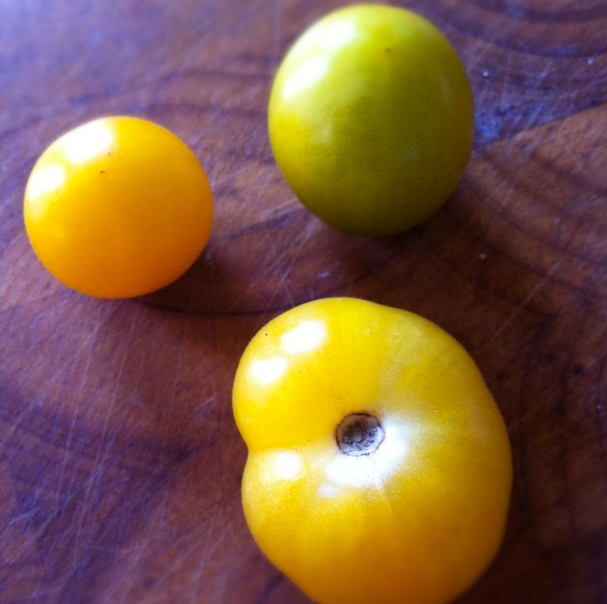
I always plant cherry tomatoes and this year I had two of the small round yellow tomato plants (upper left), one of the small green kind (upper right) and one of the lumpy yellow ones (bottom).

I wish with all my heart I remembered the names of the tomatoes–especially the lumpy yellow one as it they are so sweet I can barely stop eating them, even half-ripe.  I knew the names when I bought them and did not write them done.  “I will remember these names,” I thought, which is about the same as waking up in the middle of the night and thinking, “I will remember this dream”.

Four plants has provided a good crop for us.  We’ve been enjoying tomato salads all August and now with the branches full of ever ripening bounty I have been making tomato sauce.

not pretty but pretty darn yummy*

So here’s what I do when I get a bowl full (about 4-5 cups?).  I get out a large pan, sauté a finely chopped onion in olive oil and mash in some fresh garlic once the onion has softened.  Then I pour in the tomatoes and let simmer them until they pop, soften and release all their juicy insides.  I continue simmering  until the sauce thickens a bit and just season with a bit of sea salt.  THAT IS IT.

I always buy good pasta for these late summer meals and in this case I topped with whole milk ricotta which cut the acidity of the sauce and makes it even better.

I realized fast that I am much too lazy to blanche and peel cherry tomatoes but it actually doesn’t matter.  The sauce still tastes amazing.  It is such a perfect example of using simple, good ingredients.  And some mysteriously fertile soil at the side of our garage.  Our Macedonian neighbors are so jealous.

Tomatoes = Sauce

I am cooking up another batch today.  And thinking of my friend who started out the gardening season with a ridiculous amount of seedlings–300?  He’ll be laughing if it’s a long winter (but stressed right now as he spends the wee hours bidding on stockpots through ebay ).   And I think he’s much more likely than I to not make sauce with tomato skins in it.  Life it tougher for the perfectionists.  But if you’re really fussed you can strain the sauce through a colander which will catch most of the skin I suppose. Or just don’t eat at my house.

*that is my son’s hand ( in the photo)  stealing my food.  We had a talk, don’t worry.

9 Comments

Filed under All Recipes, Ruminations on the Edible

Check My Pulse

I have vacation belly.  The syndrome where you start with great intentions of healthful eating while on holiday (“maybe I’ll have half a freezie every other day”) and quickly surrender to all-out gluttony.  It starts with, “Well, I can’t get these duck rillettes in Ontario so of course I should have them for breakfast on a warm croissant” and ends tragically with, “Where else can I eat licorice Nibs and McNuggets for lunch if not in Quebec?”

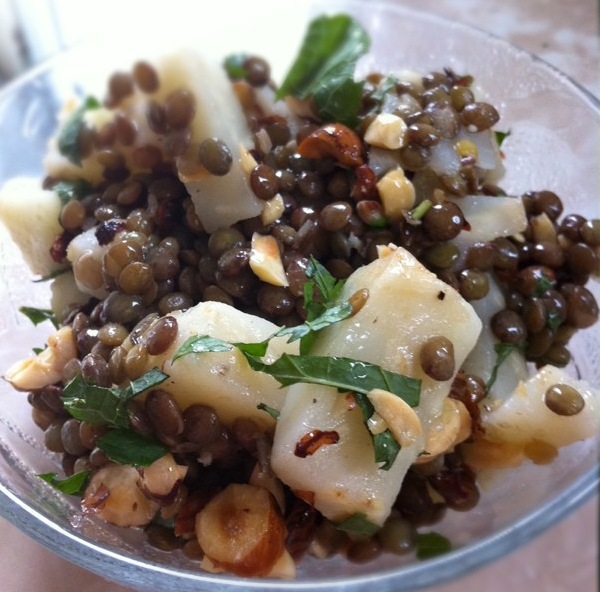
Which leads me to the amazingly delicious lentil and celeriac salad I made the day we returned from holiday.  Nutrition guilt led me to this pulse-based dish (also I had meant to make it the week before we left for holiday and the poor celeriac was losing all life sitting in the fridge).   Plus I’ve been dying to try some of the recipes in my new cookbook, “Plenty“. It’s the second from Yotam Ottolenghi, based on recipes from his UK restaurant and this book is all veggie.  (Which we need more of in this household.)

Without further ado, I introduce “Celeriac and Lentil Salad with Hazelnuts and Mint”.  Here is the original recipe from Ottoleghi’s Guardian column.

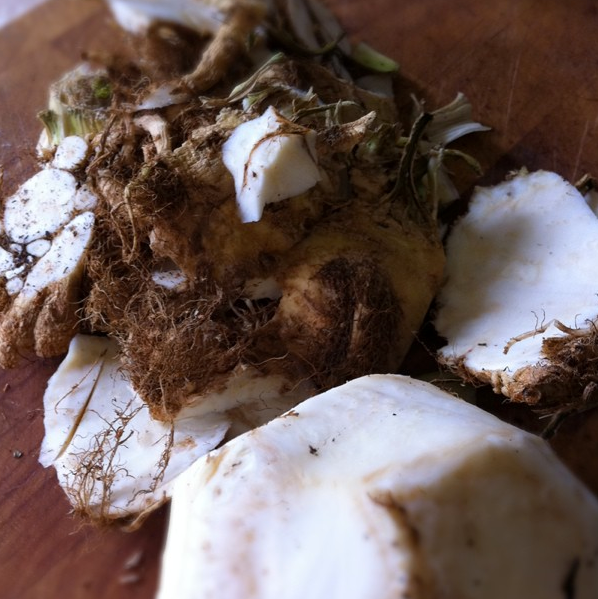
Celeriac: a rather knobby looking coconut exterior

You begin with about a 1.5 pd celeriac aka celery root (I forgot to take the picture BEFORE peeling, sorry).  And slice into 3/4 inch pieces.

Then you pop these into boiling water for 8-10 minutes until softened. Drain and set aside.

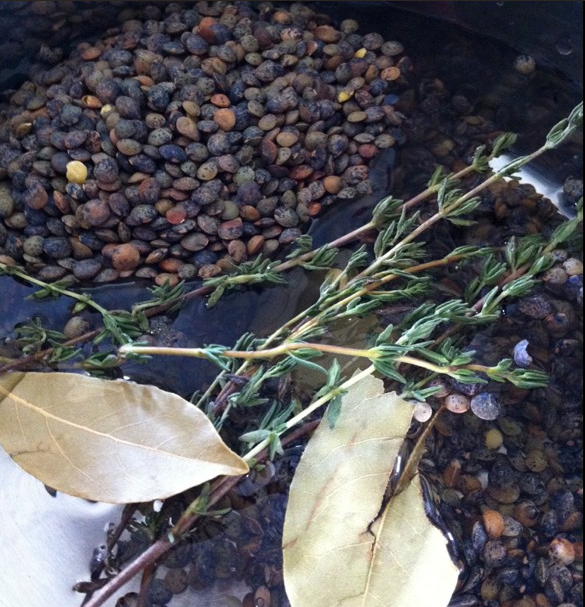
Meanwhile you gather your lentils, some thyme and a couple bay leaves, add 3 cups water and bring to a boil.

just add goldfish

You are supposed to use Puy lentils (which stay nice and firm when cooked) but I could not find them at the bulk store and so used what I had aka “lentils in the plastic container” (which I think may have been the French lentils anyway).  Once boiling, reduce heat and simmer until the lentils are cooked but still have bite to them (15 minutes or so).

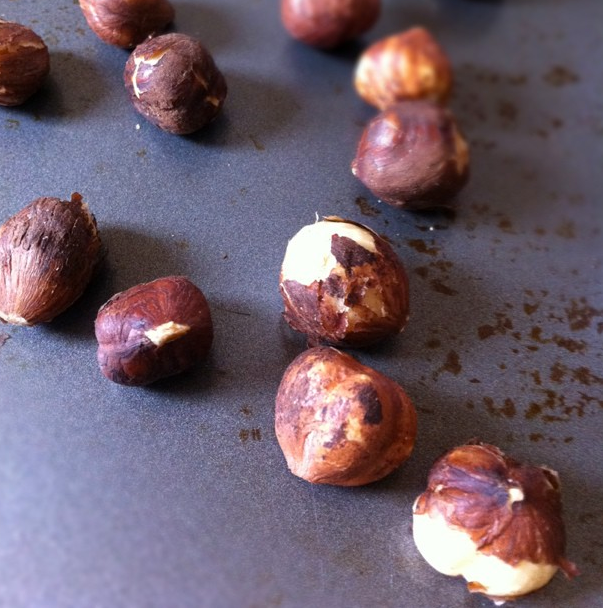
Just to make sure the oven is not feeling left out, preheat to 275 F and toast 1/3 cup hazelnuts.  Skin on.  Cool and roughly chop.  Set aside.

Chop up some fresh mint.  Easiest to roll the leaves into a “cigar shape” and chiffonade.

Drain your lentils and while they are still hot (so that they absorb flavour) add olive oil, hazelnut oil (could not get this so substituted walnut oil), good red wine vinegar and a generous amount of salt.  Plus some fresh pepper.  Mix gently.  Add the celeriac and hazelnuts and serve warm….

…or room temperature.  Just hold off adding the hazelnuts and mint til just before serving and adjust seasoning.  You will probably need a bit more vinegar.

Lusciously healthy, this would make the best brown bag lunch ever.  With chicken McNuggets and Nibs.

6 Comments

Filed under All Recipes, Cookbooks, Magazines (+recipes from), Ruminations on the Edible

So Many Damn Peaches

Planet Peach

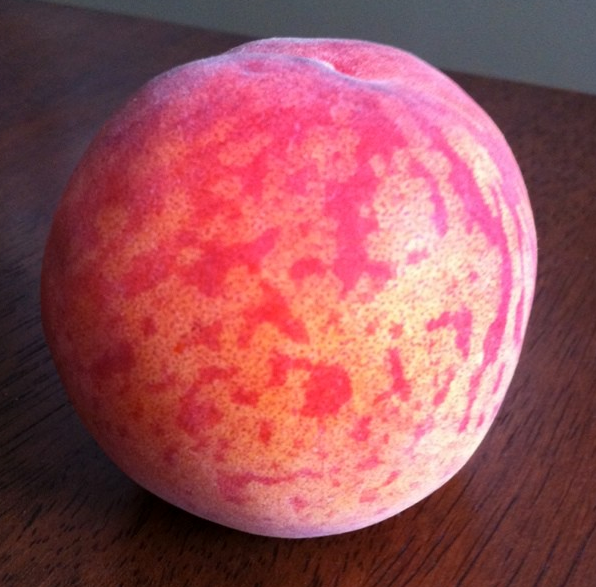
Summer peaches.  A perfectly ripe, juicy, pain in the ass.

Why do I have to buy a whole basket of peaches?  Why can’t I buy just two or three at the farmer’s market?

Because none of the farmer’s want to deal with all those damn peaches either. “Take them urban consumers!” they shout at us. (In their heads.)

So my perfect peaches sit on the counter while  fruit flies circle and I shove slice after slice into my mouth like some uber-healthy, hot dog eating contest for the “eat local” movement.  At which point I’ve only eaten 2 1/2 peaches.

Ready for the sauce.

So how do I rescue my delicate bounty from the fate of the green bin?

Luckily, Delmonte comes to the rescue.  Peaches in syrup.  AHA!

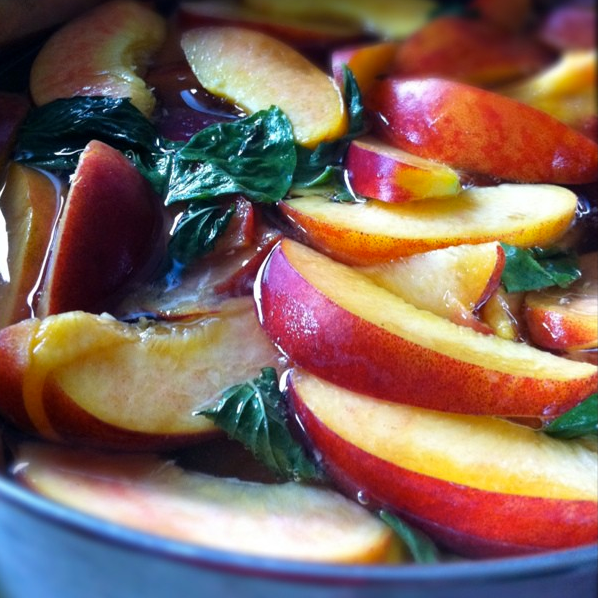
I slice eight peaches.  I make a light syrup in a medium pot.  (4 cups water, 2 cups sugar).

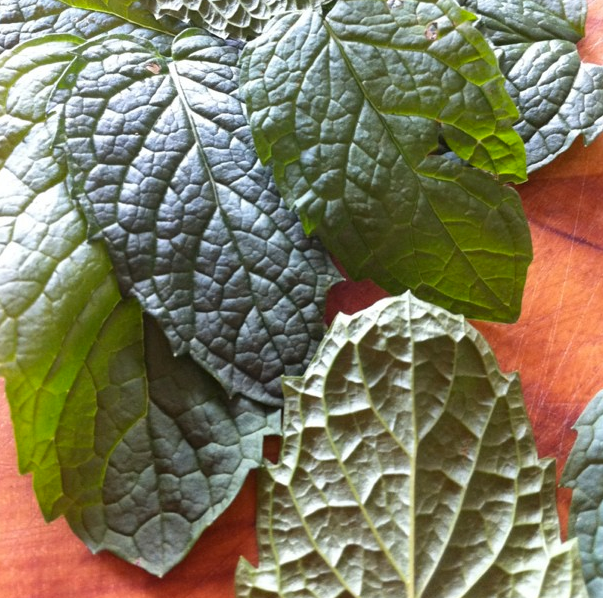
Once the sugar has dissolved I add the peaches and some mint and basil leaves (my basil plant weeps with gratitude at its usefulness–the poor thing barely sprouts a leaf under my care.)

A peach of a plan.

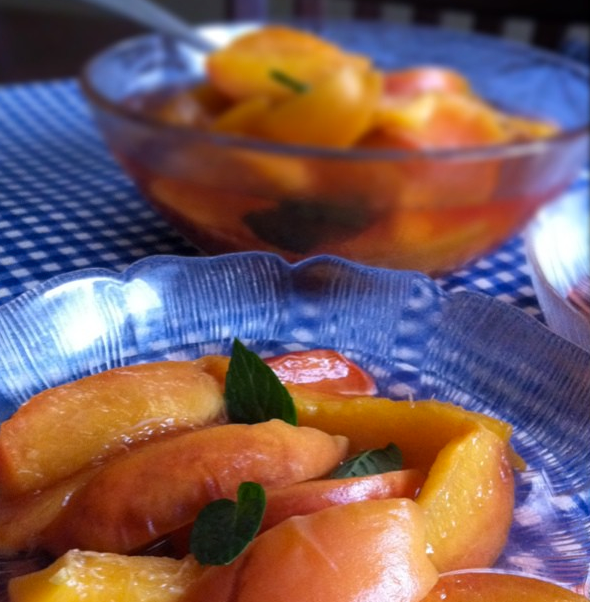
And then I bring it all up to a simmer, pour in a shot of Triple Sec (from my margarita stash) and pull it off the stove.  Let cool and store in the fridge so you can eat them all week. On top of ice cream!  YES.

Don’t be distracted by the above picture, keep your focus on the fact that the herby-fresh syrup created from our peachy compote is great for cocktails.  Like peach infused Mojitos.

The  minty, aromatic liquid is a perfect sweetener for the limey-tart concoction.  Mash some of the fruit in there too.  God knows you have to use it up somehow.

4 Comments

Filed under All Recipes, Cookbooks, Magazines (+recipes from), Ruminations on the Edible

Thanks for the ribs Pete Watson

Man, my camera was so sticky.

Nothing grilled, nothing gained as they say.  Five years after Pete Watson and his wife Lara gave us a Weber kettle grill for a wedding gift we finally made ribs on it. What idiots we were to deny ourselves the pleasures of grilling ribs on charcoal for sheer procrastination.

But we have gained, oh yes, we have gained.  Sticky fingers, kind of sexy, smoky smelling hair and the most envious aroma of deliciousness coming from any backyard in the neighborhood.   If only I had begun the process in the early afternoon as I declared I would, we could have actually had the ribs for dinner rather than the cold pizza we half-heartedly choked down waiting until the ribs were fall-off-the-bone tender at 11pm.

Here is our talented little grill pre-show.

The kettle potential.

And then I bought myself some apple wood chips and though I could not get a coal chimney (sold out) I got some quick burning coal starter things which were quite effective as long I did not let my thought wander to the substances that made them so quick-burning.

My indirect heat set-up is almost ready.

I have the coals on one side and a drip-pan filled with water on the right.  I put a stainless steel box of soaked applewood chips on the coals just before I added the top grate and the the lid.

Ribs: rubbed, rested and ready.

Two racks of baby back ribs, about 2 lbs each.  I put a dry rub on them and left them for an hour at room temperature.  The rub had sweet paprika, onion powder, garlic powder, dry mustard, celery seed, fresh back pepper and chili powder.  The recipe (BBQ Back ribs with Sweet and Sticky Sauce) came from the Saveur BBQ Issue (I know, what else, right?  I will branch out one day but once again not only were the magazine’s recipes lipsmacking but the stories of BBQ, coleslaw, baked beans, coals, tradition and rivalry were addicitive too!)

And while the ribs cooked between 225 F-250 F over 3 hrs  ( I actually found it hard to keep the heat below 300 F even adjusting the vents as much as I could) I made the sauce.  Honey, apple cider vinegar, brown sugar, worcestershire, hot sauce, cloves……MMMMMMMMMMMMMMMessy.

Served with coleslaw and napkins.

And finally at 11pm, with the grill lit from the soft glow coming through the back door of the kitchen, I was able to pull off  shreds of the crispy rib-ends that were slowly caramelizing from their recent basting in sticky sauce.  And I ate them greedily, slightly out of site of my husband before he next opened the door to ask, “are they done yet?”.  And they were good.  Sigh with pleasure good.

Like Angelina Jolie, I am now a Pitt master.

And that’s why I want to thank you Pete Watson.

5 Comments

Filed under All Recipes, Blogs with cooking tips, Cookbooks, Magazines (+recipes from), Ruminations on the Edible, Uncategorized

Fougasse: White Bread Glee

Chewy Good Times

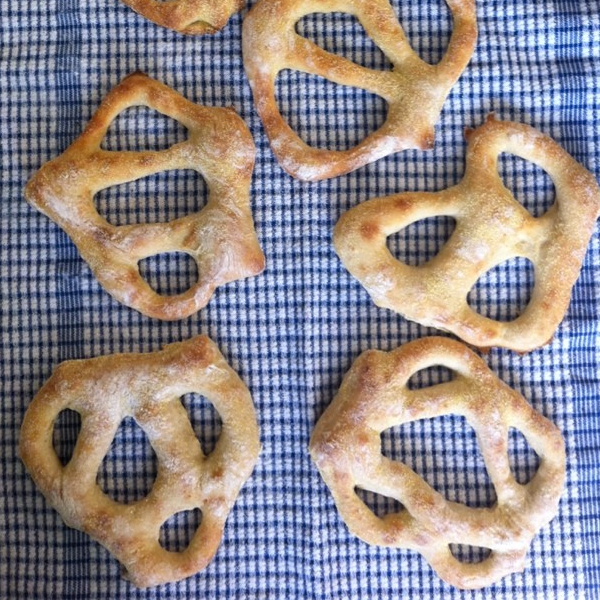
Easy. Impressive.  Can be hooked on the end of your bike handlebars.  These chewy, pretzel-like loaves are my new Gleedom.

I mean, look at them!  (let me show you an overhead.)

They multiply like rabbits, be careful.

The Fougasse first caught my attention in Dorie Greenspan’s Around My French Table where she explains that this Provencal-style bread should be eaten warm and with simple food,  like some saucisson and a glass of rosé.  Ideal for picnics.  And guess where I took mine?  On le picnic.  Man, sometimes my French instincts overwhelm me.

The recipe I actually used came from the book Dough by Richard Bertinet which has the Fougasse on the front cover. Most importantly in the book Mr. Bertinet said this was easy to make and would impress people.  Well, who am I if not someone who wants to impress with the least effort possible?

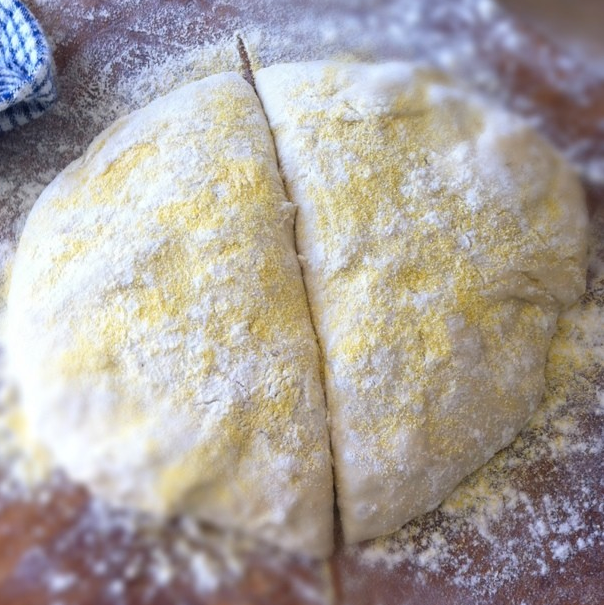
Cornmeal dusted dough

You start by making a simple white bread dough (yeast, bread flour, salt, water) and letting it rest for 1 hr until it doubles in size.  My dough took longer, maybe an hour and a half, perhaps the kitchen was a bit cool. Then you gently plop it on the counter-careful not to deflate it–and let it rest another five minutes.

Using your bread scraper you cut the dough in two (and giggle to yourself because it looks like a bum!).

And then into 6 pieces.

Baby Fougasse.

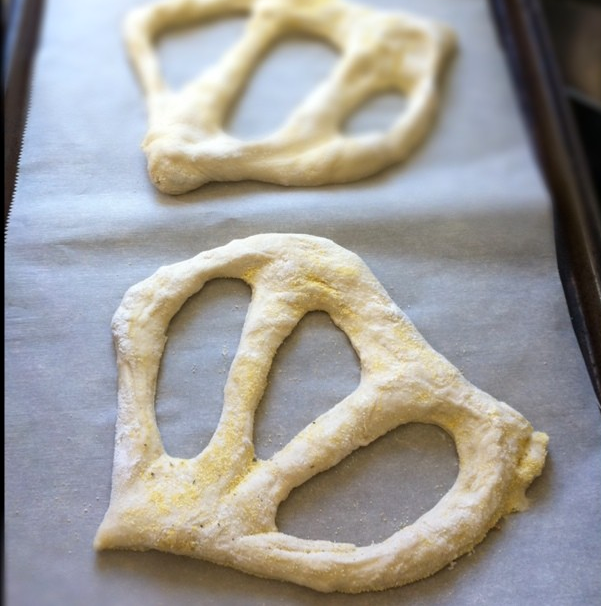
You then take each piece of dough and use the edge of your scraper to make a few diagonal cuts through the dough.  Which you then “fan out” with your fingers.

You Must Be My Lucky Star

You can also keep the dough rectangular and make parallel cuts and pull them apart to make a “ladder” shape.  Fewer holes are better because as the dough bakes any small holes will close up.  Obviously I am far (but pretty close) from being a master at this so I did most of my fougasse with only three cuts.

Ready for heat.

Now take your fougasse and pop them on a baking tray (or a wooden peel if you have one so you can slide it onto your baking stone already pre-heated in the oven 450 F).  I baked mine two at a time on a tray.  You can also press olives, or herbs into your fougasse at this point.

I did use a spray bottle to spritz some moisture into the oven before I shut the door to help get a nice crust on the bread (steam helps crust up the exterior and keep the interior soft).

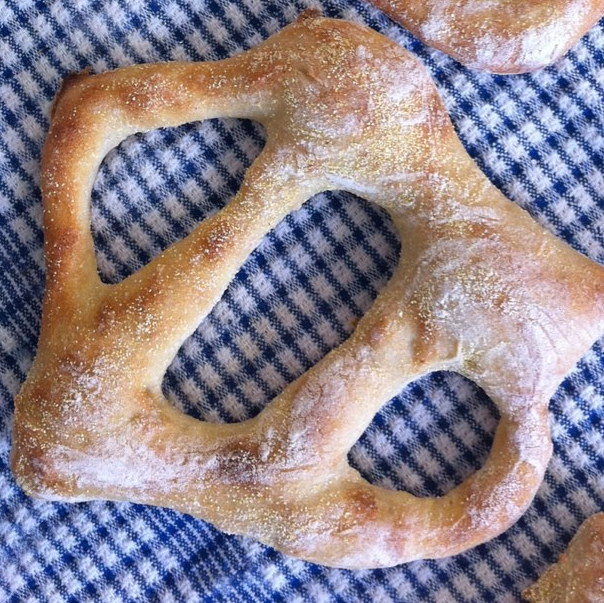
Tear apart and eat.

Et Voila!  12 minutes later a delicious picnic snack.  Just wrap them in a clean tea towel and go.

(Would also work as tasteful accessories for a meat dress).

1 Comment

Filed under All Recipes, Cookbooks, Magazines (+recipes from), Ruminations on the Edible

Marion’s Fudge Recipe (lucky you!)

This is Marion...

And this is her wonderful fudge recipe.

(Check out step-by-step photos and the story behind the 70 year old recipe)

MARION’S FUDGE RECIPE  (adapted by Sue and Donna)

1 cup packed brown sugar

1 cup white sugar

6 tbsp Becel Margerine (4 tbsp if making chocolate fudge)

3/4 cup whipping cream (35%)

1 tsp vanilla

*2 ounces (2 squares) semi-sweet chocolate only for the chocolate fudge version

Instructions

1. Grease an 8″ X 8″ dish and set aside (mine is 9″ x 9″ and works fine, just makes thinner squares).

2. Have a medium bowl ready with 1 tsp vanilla already added.

2. Into a medium, heavy bottom pot add the brown and white sugar, the margarine, whipping cream (and chocolate, if making chocolate fudge)

3. Heat over high and stir to combine.  Let boil until a candy thermometer (or digital thermometer) reads 240 F. This will take about 10-12 minutes and means you have reached “soft ball” stage.

4. Pour the molten mixture into your medium bowl.  Using a hand mixer, mix on med-high (careful not to splatter as this is extremely hot) for about 1-2 minutes until the thin splatter on the side of the bowl starts to crystallize and gets dense when you wipe it with a finger…it will be “fudge-like”.

5. Pour the mixture into your 8″ X 8″ dish and allow to cool.  Slice and share.  (yah, right!)

** I cooled this in the fridge to speed things up the first time and found that slicing it when cold was harder as the fudge was more crumbly.

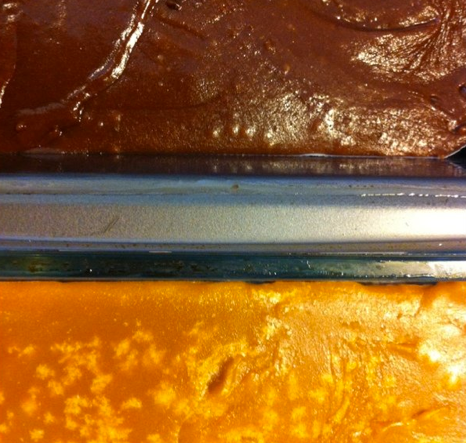
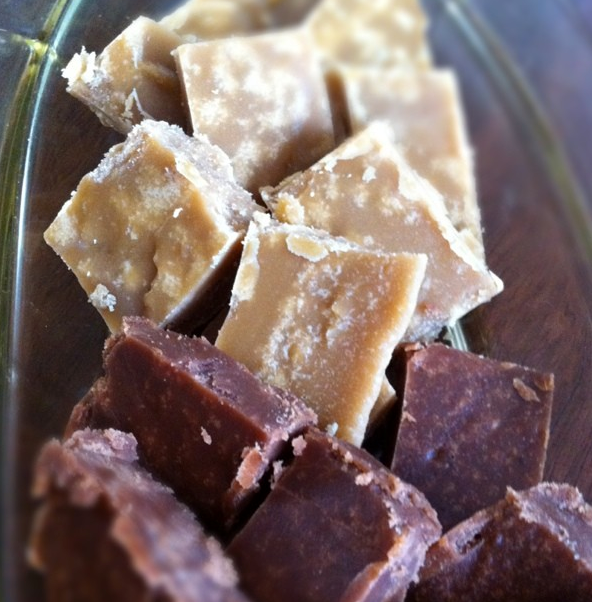
Chocolate and Vanilla so happy together.

5 Comments

Filed under All Recipes, Blogs with cooking tips, Ruminations on the Edible

No Way Your Grandma’s Fudge is Better Than This

I Want You to Want Me

This recipe is 70 years old.  And it comes from a friend of a friend,  specifically, my friend Donna’s friend Marion who is 85 and has been making fudge since she was 15 years old.  Donna brought a batch over one day, and I  thought, “fudge, I don’t really care for it”.   Little did I know it was the best fudge ever made on earth.

I finally (after several tupperware gifts of fudge) asked for the recipe.  Donna brought me a photocopy of Marion’s handwritten instructions with the caveat, “many people have asked, no one has succeeded in making it”.   As I went through the recipe the first time I realized why people were having so much trouble.  It was written in a “dash of this, a dollop of that” kind of way that  a WW II Codebreaker would have a hard time cracking.

After many gruelling fudge-making trials Donna and I nailed it.

Before STEP 1: Marion says the whole fudge making process takes about 12 minutes.  She will not answer the phone or be otherwise distracted during this critical time and recommends the same to other fudge-makers.  I timed it–she’s pretty dead on. Please put iPhone on vibrate.

STEP 1:

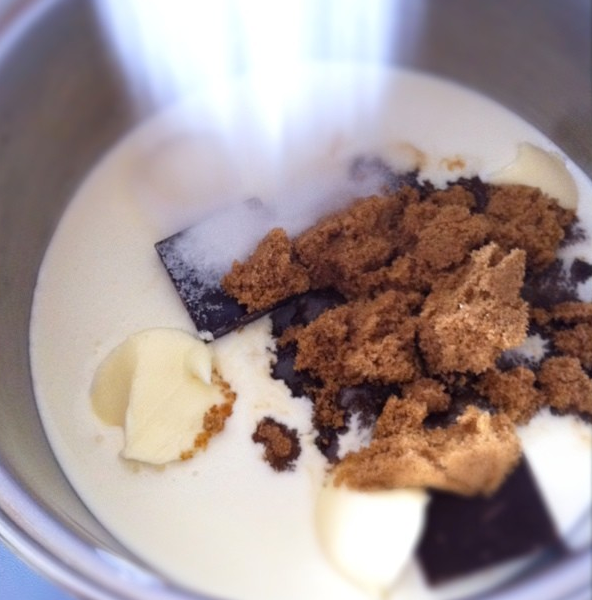
This is the chocolate fudge version. Brown Sugar, white sugar,  semi-sweet chocolate, cream and Becel margarine.

The basics of fudge.

The first time we tried this I carefully measured the Becel margarine (I contemplated using butter but do I really want to mess with a 70-year-old recipe?) using my measuring spoons.  Marion’s recipe said “4 tbsp.”   The fudge turned out OK, but not nearly as creamy as it should be.  I asked Donna to investigate.  She came back and told me that the spoon Marion uses as a “tablespoon” is huge.  I pulled out a soup spoon, “like this?” I asked.   “Bigger” Donna said.  I pulled out a serving spoon, and yep, hit the nail on the head.  So for the vanilla fudge I use 6 tbsp of Becel margarine and it works like a charm.  (4 tbsp seems OK for the chocolate as I think the chocolate adds creaminess).

Step 2:

You now bring all the ingredients to a boil in a medium-sized, heavy bottom pan.  You can stir them together as they melt.  You are waiting to heat the liquid to soft ball stage (235-245 F).

Waiting to reach soft ball stage.

Marion uses the eyeball technique to pinpoint “softball.”  You pull the mixture off the stove every once in a while and drop a globule into very cold water.  You then roll the droplet between your fingers in the water to form a soft ball  (which then flattens on your hand when removed from the water.)  It takes some practise to grasp what you’re looking for.

I nixed that technique.  If you’re not a pastry chef or a frequent baker I predict this will be the end of your fudge making.  Instead I grabbed the digital thermometer (a candy thermometer available at the grocery store is also fine) and pulled the mixture off the stove at  240 F.

Step 3:

This was the most mysterious part of Marion’s process.

Mix Master

The instructions read, “Pour mixture into your Mixmaster and beat on speed 11 for about 1 minute. Carefully watching.”  Watching for what?  Donna did not know either.  Secondly, I am pretty sure the Mixmaster only exists in Marion’s kitchen and the Julia Child kitchen at the Smithsonian (it has 11 speeds!).

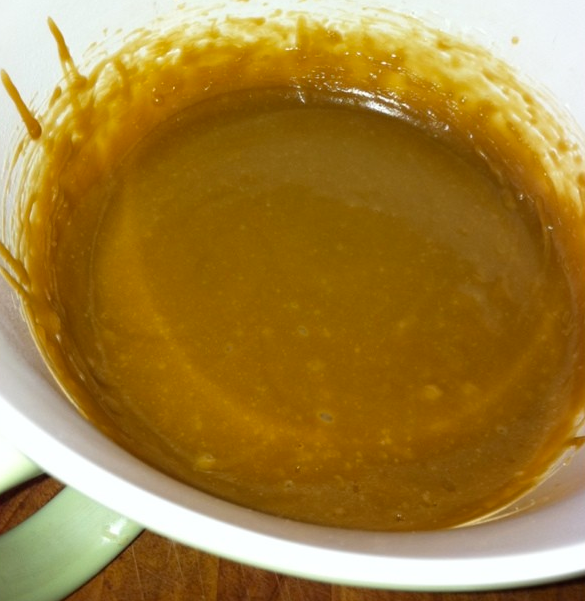
After careful watching

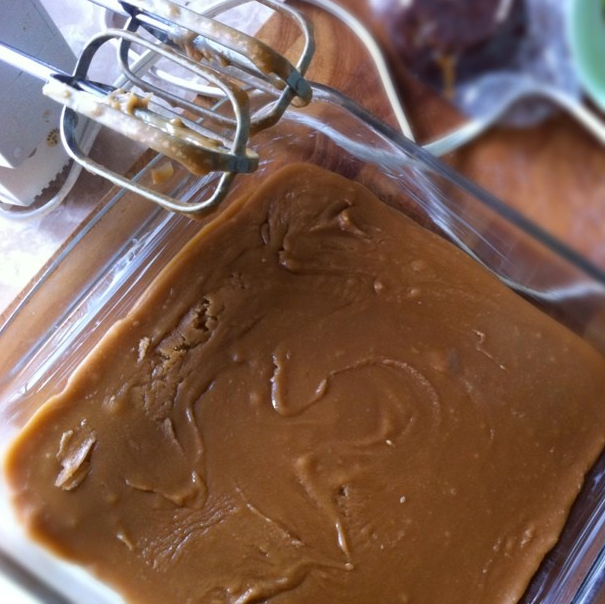
Instead of the Mixmaster I pulled out my electric beater and used that. Considering it is a hand-me down from my mom and its highest speed is as fast as the “low” speed on a new model, I figured it would work.  I poured in the hot fudge with a tsp vanilla and started beating.  And after about a minute I saw the splattered edges of the bowl start to crystallize–like the texture of fudge. Which I believe is what you’re “carefully watching”for.   So at that point I poured the thickening mixture into a 9″ X 9” greased dish.

Fudge settles in.

Step 4:

Allow to cool while you lick the bowl.  Slice and eat.  You win!  Your life is now the best it will ever be.

Oh boy.

Marion’s Fudge Recipe (Adapted for lesser mortals).

4 Comments

Filed under All Recipes, Blogs with cooking tips, Ruminations on the Edible

Not to beat a dead nut bar or anything (recipe)

Dried blueberries, cherries, pineapple, macadamia nut. What more can I tempt you with??

Made my brother’s nut bars with my friend Lisa yesterday and our combo turned out awesome (yes, awesome, MACLEANS’s).  So here it is.  For the detailed directions go to my brother’s recipe HERE.  Don’t freak out, it just looks complicated and scientific.  Actually it’s just a bunch of stirring and putting a tray into the oven– but he has great tips for substituting ingredients and doing your own thing

Our combo was:

SEEDS:

1/2 cup sunflower
1/2 cup ground flax

NUTS

1 cup chopped pecan
1 cup chopped walnut
1 cup chopped macadamia nut
1 cup cashews

Fruit

1 cup dried pineapple
1 cup dried blueberry
1 cup dried cherry

Oats

1 cup rolled oat
1 cup granola

BINDING  AGENT

3/4 cup honey
1/2 cup brown sugar

1 ounce butter
1 ounce pumpkin seed butter

1 tsp salt
1 tsp real vanilla extract (scraping in a vanilla bean might be awesome.)

LES INSTRUCTIONS:

Preheat oven to 350 F.  Line a cookie tray with parchment and set aside (for final baking of bars).

Meanwhile, chop up your nuts if need be.  Chop up fruit and have it ready (only if you want smaller chunks–we did chop the pineapple but not the cherries. If you even consider chopping the blueberries you are the nut bar in this recipe.)

Put the oatmeal/granola and nuts/seeds on a couple trays (just divide any which way) and warm in the oven for 20 minutes.  Check to make sure nothing burns.  I turned down the heat to 300 F half-way through.

Melt the honey, brown sugar, butter and pumpkin seed butter plus the vanilla and salt in a large pot (must be able to hold all the ingredients).

Add the fruit and stir to coat.  Add the rest of the dry stuff (oats, nuts, seeds) still warm.  Mix to coat (it will look like there is not enough binding agent but it works perfectly.)  Pour the whole mixture onto a tray lined with parchment.

Flatten it and it should make a nice thick layer.   Bake at 350 F for 15 minutes.  We checked it at 12 but it was still a bit “gooey”.  15 minutes did the trick.

Cool and slice.   Feel awesome.

Leave a comment

Filed under All Recipes, Blogs with cooking tips, Ruminations on the Edible

You crazy Czechs!

Imagine peeling back the fingernail.

Unwanted company?  No problem.  Use your basic Linzer Cookie Dough and bake up some bloody finger pastry.

This was passed down to my mom through the Czech email chain.  It’s for the “blushing bride”.

See how practical the East Europeans are?  Scare away your guests but do it using a good homemade pastry.  And good jam–mainly fruit.  You don’t want to look like a bad hostess for God’s sake. And you’re not going to let these perfectly good cookies go to waste.  They’ll be great for dipping in coffee. Not like those rock-hard biscotti things the Italians make.

And while we’re on the subject of Czech humour (were we?)…..please forgive this.  (and don’t think there’s not a “Will you take a Czech?” panel too.)

Why isn't it in Czech?

3 Comments

Filed under All Recipes, Strange but Tasty

Dave’s Nutbar Recipe (more thorough than a prostrate exam)

Top Secret Ratios

These Nut Bars make a great energy boost after an exhaustively uplifting episode of Glee or before an emotionally draining episode of Grey’s Anatomy.

In case you can’t quite follow the arrows and my brother’s handwriting, here’s how we made the super-tatsy, energy-supplying, don’t die hungry if stranded in the forest (or a big mall) nut bars.

The recipe is below but anything in RED is my brother’s advice from his many nutbar tests.  My sister-in-law read his comments and thinks she is married to Alton Brown.  I read his comments and wondered how he does anything else aside from making nut bars.

Ratio for solid ingredients:

(assuming 1 cup=1 part in this case to work with binding agent measurements)

1 part Seeds (pumpkin, sunflower, flax ect)

Sesame seeds are great. Use ground flax, unprocessed flax just passes though your system with little benefit.  Ground flax is a great way to add fiber to the bars.  I think in the batch we used we crushed a bunch of bran cereal as a substitute.  If you like seeds, you can also replace some of the nuts with seeds.

2 parts Oats/granola (half should be rolled oats)

Any dry complex carbohydrate can be used here. No need for sugar so you can go all oats. For a nuttier bar, use only rolled oats. They have a lower GI.   (Some may not like the texture/taste. Personally this is a good thing because it leave more bars for me to eat.)

 In a bind, you can go ghetto and add puffed rice. There is enough quick energy in the sugars of the binding agent, so aim for carbs with a LOW glycemic index. (http://www.glycemicindex.com/)

3 parts Dried fruit (roughly chopped cherries, apricots, raisins, prunes, blueberries ect)

Stay away from any fibrous fruit. No dried apple, peach, mango, etc… I wasn’t so fond of the  prunes either. Pineapple, apricot and dried cherries are the best. no need to chop the cherries.  Better not to actually.

Oh, FINELY chopped candied ginger gives the bars a nice aromatic flavour.  Do not use more than 1/2 cup… 1/4 cup is plenty.

4 parts Nuts (roughly chopped almonds, hazelnuts, walnuts, pecans, macadamia nuts, brazil nuts ect)

If you hate chopping, either buy pre-chopped nuts (they are cheaper) or use some combination of walnuts and cashews. In the later case, after you measure out all the nuts, you can just crush them by hand in a large bowl… make sure to do this before you add the oats or crushing them by hand will be harder/more messy.

Binding Agent

3/4 cup honey  (do not substitute–Dave has tried and for some reason honey is key)

Honey is 1.5% sucrose, 7% maltose and the remainder nearly equal parts of fructose and dextrose with a little bit of H2thrown in. You could probably use some combinations of other liquid sugars that works out to the same ratios.  My guess is that corn syrup would work here. Its about 50/50 fructose/glucose IIR.

1/2 cup brown sugar (can try molasses or corn syrup)

Any sucrose can be used… maple syrup is nice, but you will need to bake the final product a little longer, or boil it off by simmering the binding agent for a little longer.

2 ounces fat (butter or oil)  This is necessary to keep the bars chewy and not hard.

It’s not important what type of fats you use, if you prefer unsaturated fats you can use olive oil, sesame oil, etc.  I favour Macadamian nut butter. The little jar I bought had the  almost the same grams of fat per volume as butter.  It give the bars a really nice creamy taste.  It is expensive though. As a rule of thumb, just keep the fats equal to those found in 2oz of butter. DO NOT USE PEANUT BUTTER. It will ruin the bar… tried several times. You need too much of it to give you the fats you need and all that peanut butter turns the bars into dense bricks.  If you want a peanut taste, add crushed peanuts!

vanilla (to taste)

salt (to taste–careful if you’ve used salted nuts))

**you can add other spices, cocoa powder or flavouring in here too–maybe anise extract?

Directions:

1. Combine nuts, oats and seeds and warm in oven at 350 F for 15 minutes.

Be careful not to toast them too much. They will get another 20 minute bath of heat soon. The point here is to just warm them up so they will not shock the binder into solidifying.  The warm nuts make it easy to combine evenly with the binder.

2. In a large pot combine the binding agent ingredients and melt til smooth.

3. Add in the dried fruit mix and then add in the other dry ingredients-mix till all combined and coated.

Be careful how long you leave the fruit in the simmering binder before the nuts are added. They will quickly start to absorb the binder and leave less to hold the bars together.  I guess you could use this to your advantage if you have some fluid to remove like the case where you used maple syrup instead of crystallized sucrose.

4. Line a cookie sheet with parchment.  Flatten the mixture onto the parchment.

5. Bake at 350 F for 20 minutes.  (you want the bars to lose some moisture and become solid, but not too crunchy so check them at the 12-15 minute mark).

The only thing you can check here is whether or not the bars are burning (getting too dark). The sugars at this temperature will make the flattened goo seem softer than it will be when everything cools. Stick with 15-20 minutes for your first batch. Every combination of ingredients, even if you keep to the 4-3-2-1 ratio will require a slightly different bake time. This is where practice makes perfect. The other bake time factor is the thickness of the bars.  The thicker they are, the harder it is for the moisture in the center to escape. When experimenting with your bars, try different sizes of cookie sheets that allow you to play with the thickness.  Erin likes gooier bars than I do, so you could even make half a sheet a bit thicker for the goo lovers and thin out the other side for a harder (and cleaner) bar.

Cool and divide.

Winter is dangerous… the bars cool fast and cold bars get brittle.  It’s best to cut them slightly over room temp.  If you cool them in the fridge or freezer and forget about them, it’s better to let them warm up before cutting.

Back to Sue:

I’m now excited and terrified to make these on my own.  Because if I screw these up after the minute instructions supplied by Dave, I will run into the woods wearing only nylons and a bandana and chew on tree bark until I pass out from sobbing.

6 Comments

Filed under All Recipes, Blogs with cooking tips, Ruminations on the Edible